
North America’s avian tapestry includes some of the most vibrantly colored songbirds in the world, with finches standing out as particularly spectacular examples of nature’s palette. From the crimson splashes of the House Finch to the golden brilliance of the American Goldfinch, these small yet visually striking birds add bursts of color to backyards, forests, and meadows across the continent. While some finch species display their colors year-round, others undergo remarkable seasonal transformations, donning their most vivid plumage during breeding season to attract mates. This article explores the most colorful finch species found throughout North America, delving into their distinctive appearances, fascinating behaviors, habitats, and the conservation challenges some of these beautiful birds face in changing environments.
American Goldfinch: The Wild Canary
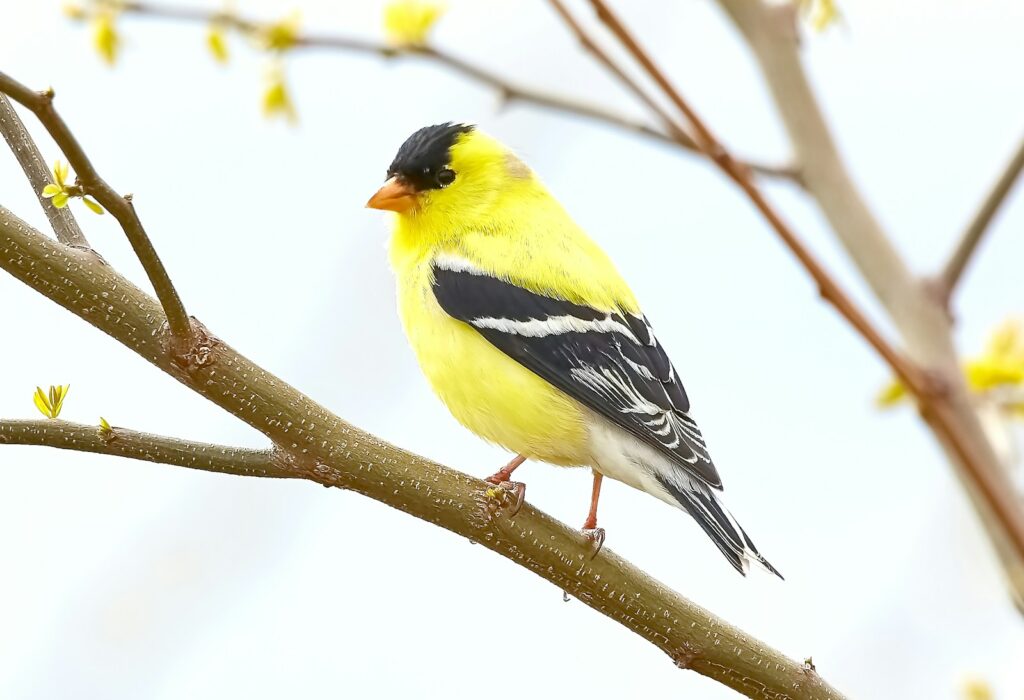
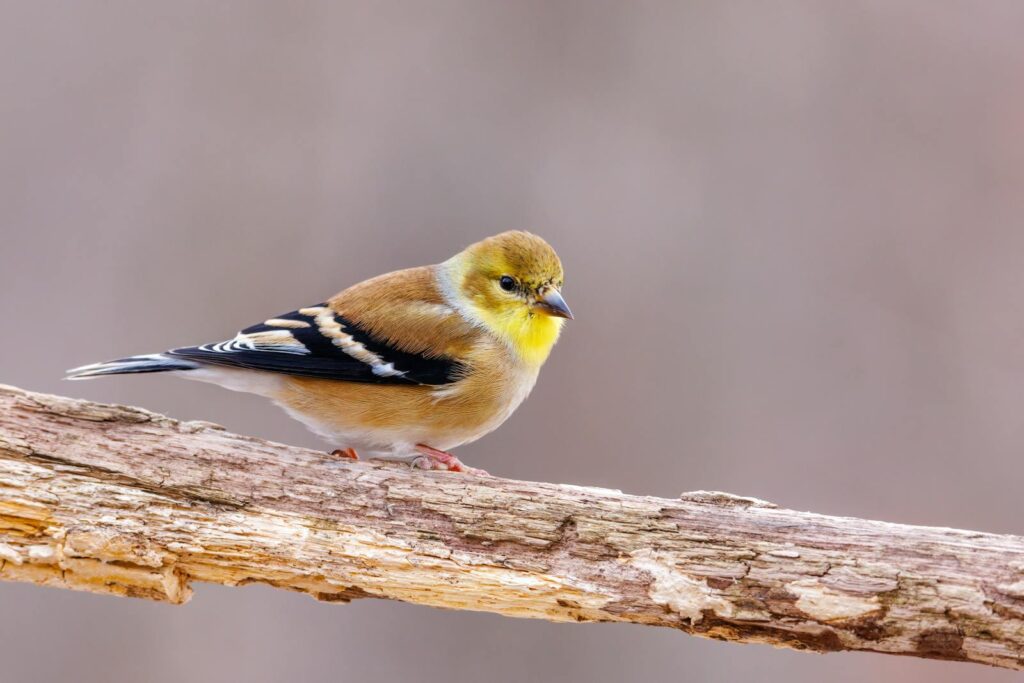
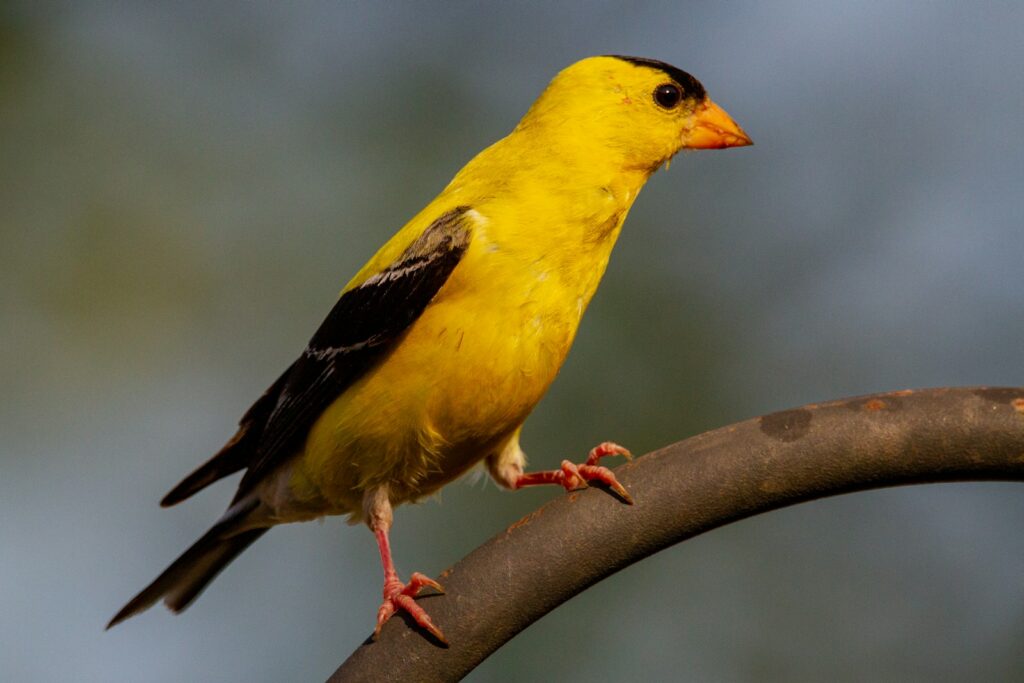
The American Goldfinch (Spinus tristis) stands out as perhaps the most recognizable colorful finch in North America, with males sporting brilliant lemon-yellow bodies contrasted by striking black wings and a black cap during breeding season. This remarkable seasonal transformation from their duller olive-brown winter plumage to their bright summer attire has earned them the nickname “wild canary” among many bird enthusiasts. American Goldfinches are vegetarians in the truest sense, consuming almost exclusively seeds rather than insects, with a particular fondness for thistle and sunflower seeds. Their distinctive undulating flight pattern, accompanied by a sweet “po-ta-to-chip” call, makes them easily identifiable even at a distance. These social birds often gather in flocks outside of breeding season, creating stunning displays of collective color when they descend upon meadows full of seedheads or well-stocked backyard feeders.
Purple Finch: The Raspberry-Dipped Songster
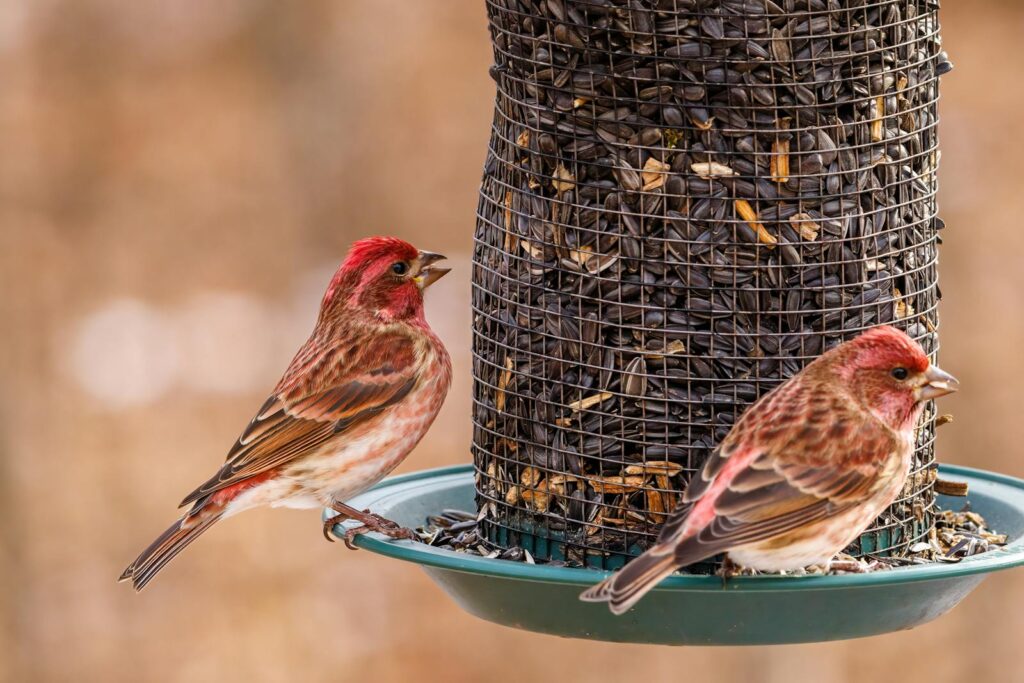
The Purple Finch (Haemorhous purpureus) presents one of nature’s most beautiful color illusions, as the male’s plumage isn’t truly purple but rather appears as if the bird was dipped in raspberry juice, creating a rich reddish-pink wash across its head, breast, and back. This native North American finch can be distinguished from the similar House Finch by its more uniform coloration, lack of streaking on the sides, and slightly stockier build. Males deliver one of the most melodious songs among finches—a rich, bubbling warble that can last several seconds and encompasses a wide range of notes. Purple Finches primarily inhabit coniferous and mixed forests across Canada and the northern United States, though they sometimes move southward during winter months in search of food. Despite their beauty, Purple Finch populations have declined in eastern North America, partially due to competition from the introduced House Finch that has expanded its range significantly over the past century.
House Finch: The Adaptable Redhead
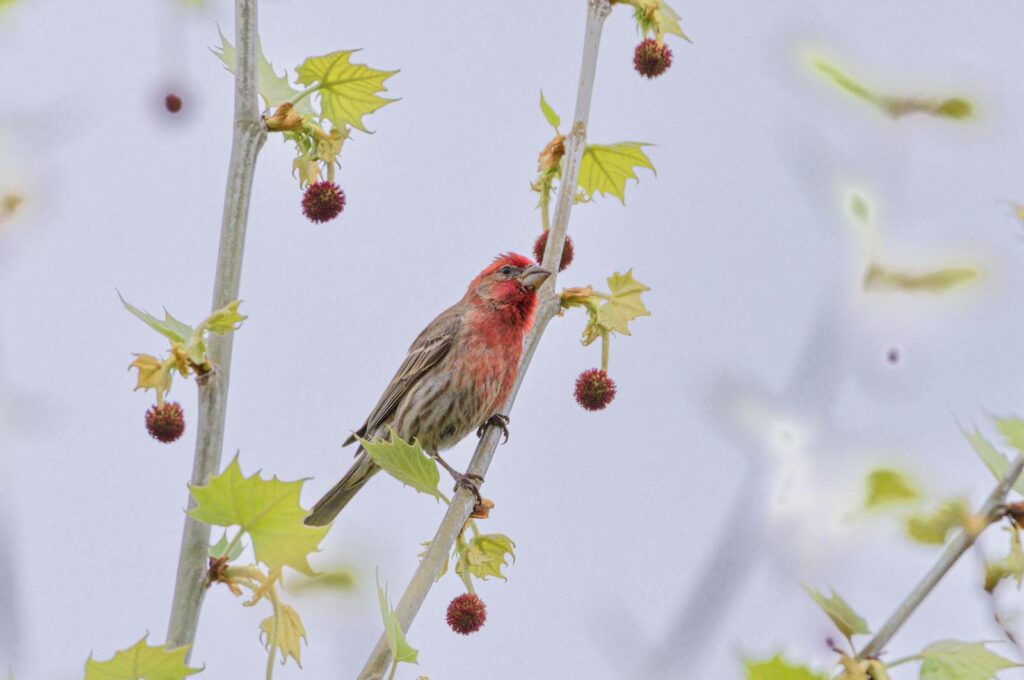
The House Finch (Haemorhous mexicanus) boasts males with varying intensities of red coloration that can range from bright scarlet to orangish or even yellowish hues depending on the bird’s diet—the more carotenoid pigments in their food, the redder their plumage becomes. Originally native to western North America, this adaptable species was introduced to Long Island, New York, in the 1940s when pet store owners released captive birds to avoid prosecution under laws prohibiting the sale of native species. From this small eastern introduction, House Finches expanded dramatically and now occupy most of the continental United States and southern Canada, demonstrating their remarkable adaptability to human-altered environments. House Finches are frequent backyard feeder visitors, where they show particular preference for black oil sunflower seeds and may gather in noisy, chattering groups. Their cheerful, warbling song is a common soundtrack in suburban neighborhoods, where they readily nest on buildings, in hanging planters, and even in unused light fixtures.
Cassin’s Finch: The Mountain Jewel
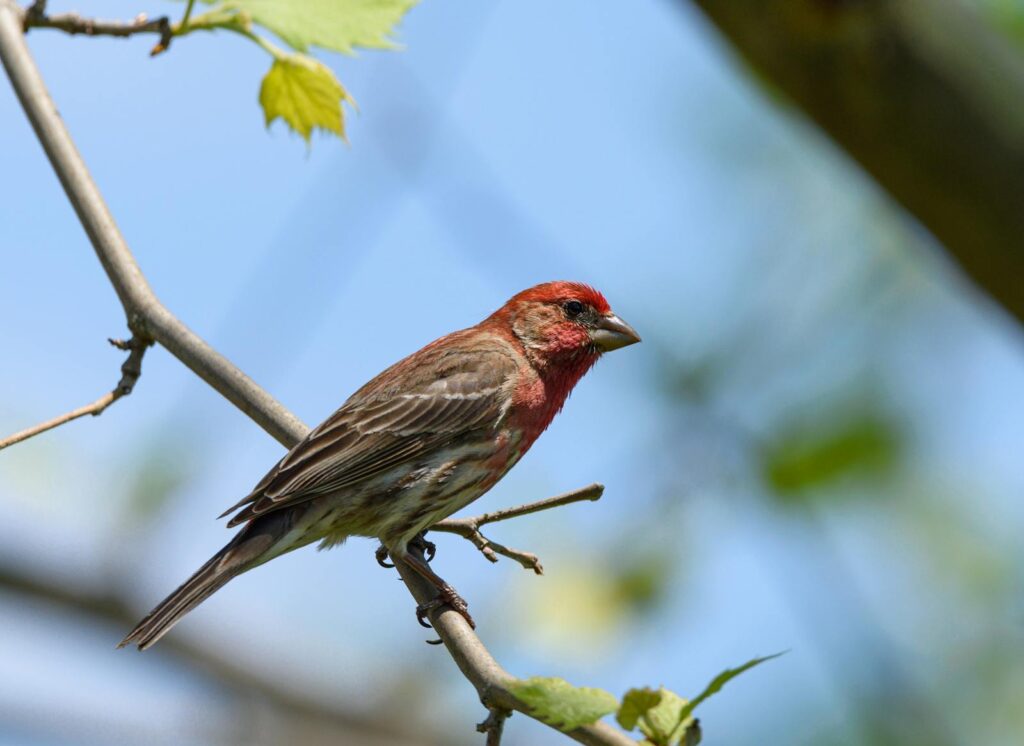
Cassin’s Finch (Haemorhous cassinii), named after the American ornithologist John Cassin, displays a brilliant rosy-red crown that appears almost flamingo-pink against its otherwise pale body, giving males a distinctive “wearing a cap” appearance. This mountain specialist inhabits coniferous forests at higher elevations throughout western North America, particularly in the Rocky Mountains, Sierra Nevada, and Cascade Range, where they forage among pine cones for seeds. Cassin’s Finches possess remarkable vocal abilities, with males capable of mimicking other bird species and incorporating these borrowed phrases into their own complex songs. During winter, these birds may form nomadic flocks that move to lower elevations or more southerly locations in search of food sources, sometimes appearing at feeders during these movements. Though similar in appearance to both Purple and House Finches, the Cassin’s Finch can be distinguished by its longer wings, more pronounced streaking on its flanks, and its specialized montane habitat preferences.
Pine Grosbeak: The Rosy Forest Giant
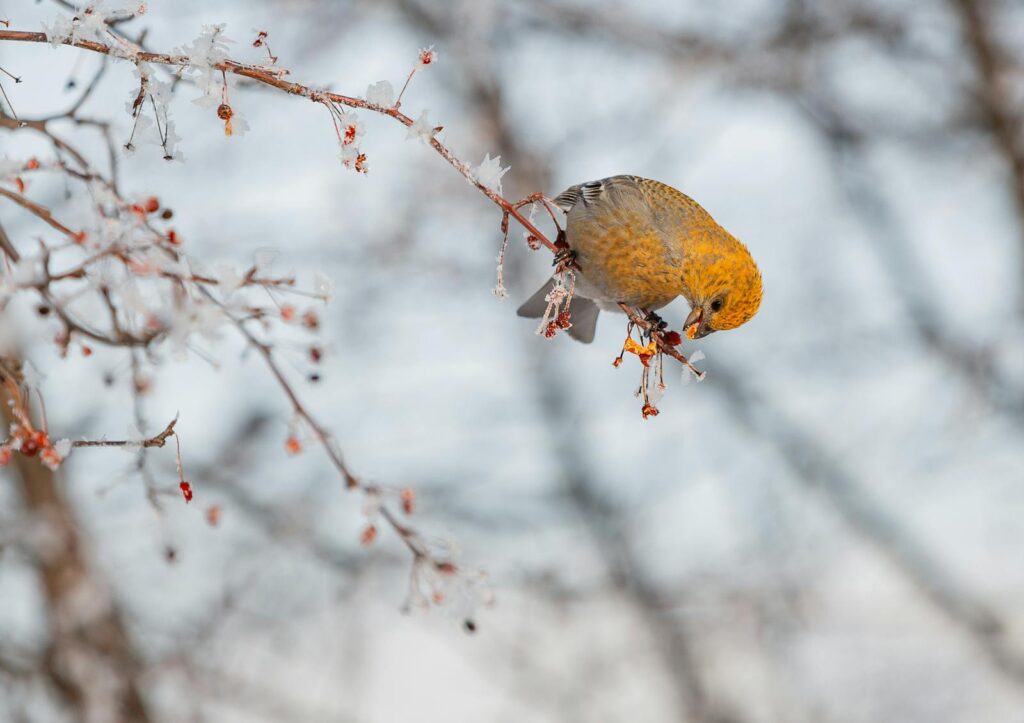
The Pine Grosbeak (Pinicola enucleator), while technically classified as a finch, is significantly larger than its relatives, with males displaying a stunning rose-red or pinkish-red plumage across their head, breast, and back, contrasted against gray wings with white wingbars. These magnificent birds primarily inhabit the boreal forests of Canada, Alaska, and mountainous regions of the western United States, where they feed on seeds, buds, berries, and occasionally insects. Pine Grosbeaks are remarkably tame and approachable, sometimes allowing humans to come within mere feet before flying away, earning them the nickname “pine dummies” among some birders. Their sweet, flute-like calls echo through northern forests, particularly during winter when small flocks may venture into more open areas to feed on mountain ash berries, crabapples, and other fruit. Female Pine Grosbeaks, while less vibrantly colored with olive-yellow hues replacing the males’ red, still rank among the more colorful female finches in North America.
Red Crossbill: The Evolutionary Marvel
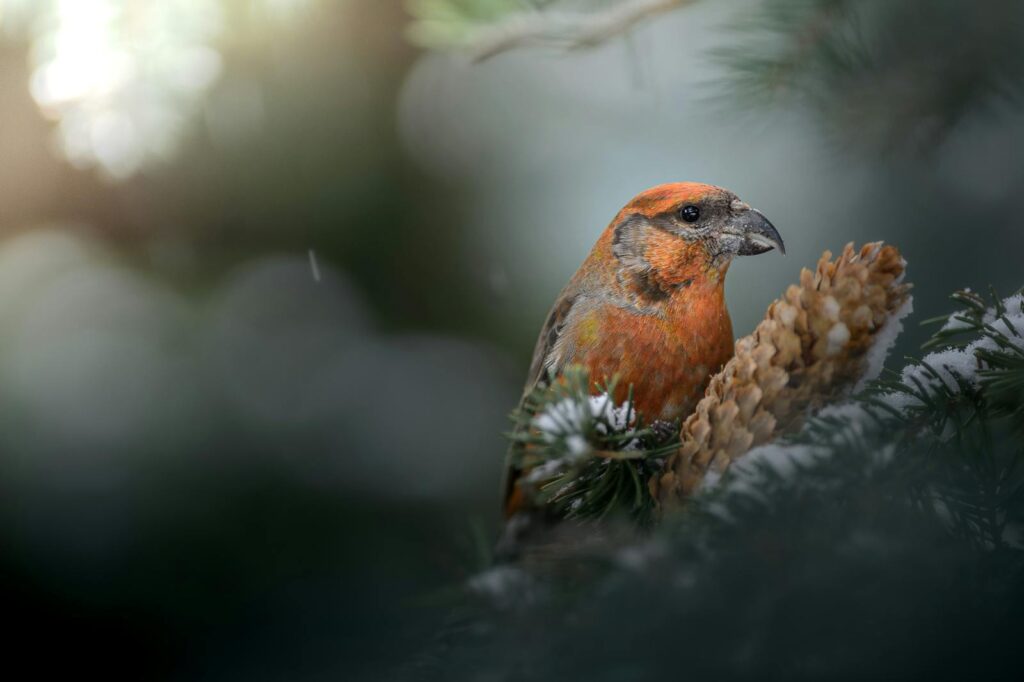
The Red Crossbill (Loxia curvirostra) features males with brick-red to orange-red plumage and the distinctive crossed bill that gives the species its name, creating one of the most specialized feeding adaptations among North American birds. This species represents an evolutionary marvel, having diversified into multiple types (potentially separate species) with differently sized bills adapted to efficiently extract seeds from specific conifer species, including pines, hemlocks, spruces, and Douglas-firs. Red Crossbills are highly nomadic, traveling widely in search of conifer cone crops and sometimes appearing unexpectedly in areas far outside their typical range during “irruption years” when food sources fail in their normal habitats. Their unusual breeding biology allows them to nest whenever conditions are favorable, even in winter months, with breeding triggered by food availability rather than seasonal cues. The brilliant males often sing from conspicuous perches atop conifers, their warbling songs carrying across forest canopies as they establish territories or attract mates.
Evening Grosbeak: The Golden Giant
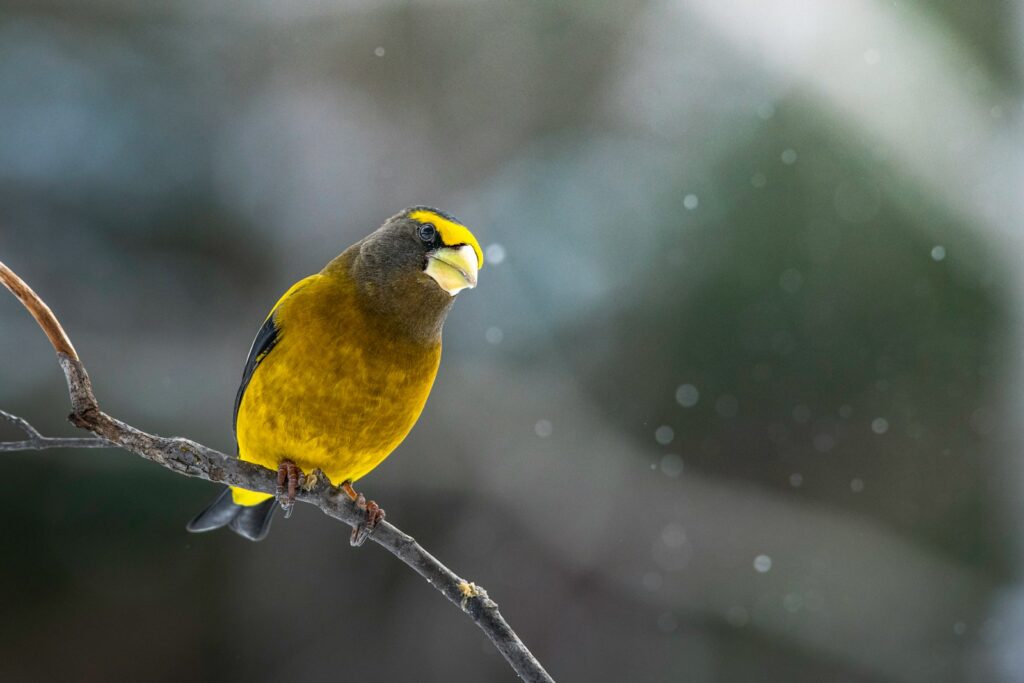
The Evening Grosbeak (Coccothraustes vespertinus) presents one of the most striking color combinations among North American finches, with males displaying a brilliant yellow body, bold black wings patterned with white patches, and a distinctive yellow eyebrow against a dark head. These robust, heavy-billed finches are among the largest members of the finch family in North America, bringing a dramatic presence to any feeder they visit during winter irruptions into southern parts of the continent. Evening Grosbeaks possess incredible bill strength, capable of cracking large seeds and even cherry pits with apparent ease, making a distinctive cracking sound as they process food. During breeding season, they primarily inhabit coniferous and mixed forests across Canada and parts of the western United States, where their diet expands to include insects, especially spruce budworms during outbreak years. Unfortunately, Evening Grosbeak populations have experienced significant declines since the 1970s, with the species losing an estimated 92% of its numbers, making each irruption into populated areas all the more precious for observers.
Common Redpoll: The Arctic Visitor
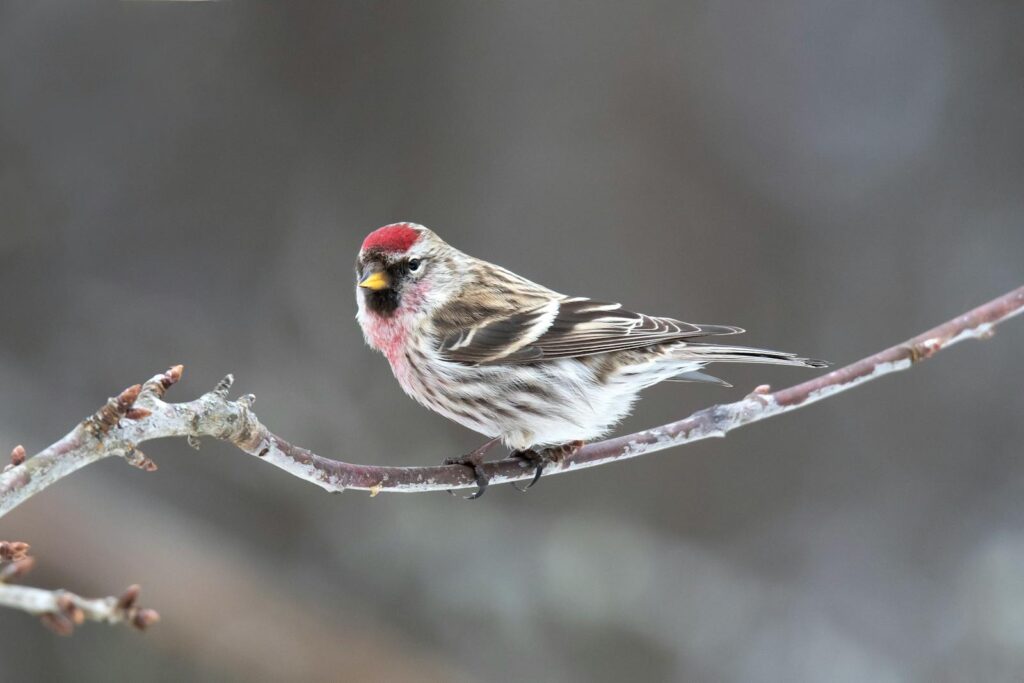
The Common Redpoll (Acanthis flammea) brings a touch of color to winter landscapes with its rosy pink breast and distinctive red forehead patch that gives the species its name, providing a cheerful contrast against its otherwise streaked brown-and-white body. These hardy finches breed in the Arctic tundra and boreal forests before moving southward during winter, sometimes appearing in large, active flocks at feeders across the northern United States. Common Redpolls have developed remarkable adaptations for surviving harsh Arctic conditions, including feathered foot pads for insulation and specialized throat pouches that allow them to quickly gather and store seeds for processing later in sheltered locations. Their energetic feeding behavior and constant movement help maintain body heat in cold temperatures, with studies showing they can survive temperatures as low as -65°F (-54°C). During particularly cold nights, these ingenious birds may even tunnel into snow to create insulated roosting cavities, using the snow’s natural insulating properties to maintain body heat through the darkest Arctic nights.
Lawrence’s Goldfinch: The California Endemic
Lawrence’s Goldfinch (Spinus lawrencei) stands as one of North America’s most range-restricted and distinctive finches, displaying a unique color combination with the male’s gray body, black face, and brilliant yellow patches on its wings and breast. This California specialty breeds primarily in open oak woodlands, chaparral, and streamside areas where it can access its preferred food—seeds from native plants in the mint family (Lamiaceae), particularly those from the genus Salvia (sages). Lawrence’s Goldfinches are highly nomadic within their limited range, with breeding locations varying widely from year to year depending on seed availability and rainfall patterns. Their erratic movements make them prized sightings for birders, who often must search extensively through appropriate habitat to locate these beautiful but unpredictable finches. The males perform elaborate courtship flights, rising in spirals above the females while singing their distinctive tinkling songs, showcasing both their visual and vocal beauty during the breeding season.
Varied Bunting: The Southwest Jewel
The Varied Bunting (Passerina versicolor), while technically classified in the cardinal family rather than true finches, deserves mention for its spectacular coloration that rivals any North American finch. Males display an astonishing combination of deep blue, rich purple, and warm rusty-red plumage that changes appearance dramatically as light angles shift, creating an almost iridescent effect. This stunning bird inhabits arid brushlands and desert washes in the southwestern United States, particularly in southern Arizona, New Mexico, and Texas, where they build cup-shaped nests in thorny shrubs. Varied Buntings are relatively secretive birds that often remain hidden within dense vegetation, making brief appearances as they sing from exposed perches, their rich warbling songs punctuating the desert silence. Unlike many colorful birds that migrate to the tropics for winter, Varied Buntings are short-distance migrants, moving just south of the border into Mexico during the coldest months before returning to their breeding territories in spring.
Lazuli Bunting: The Western Blue Beauty
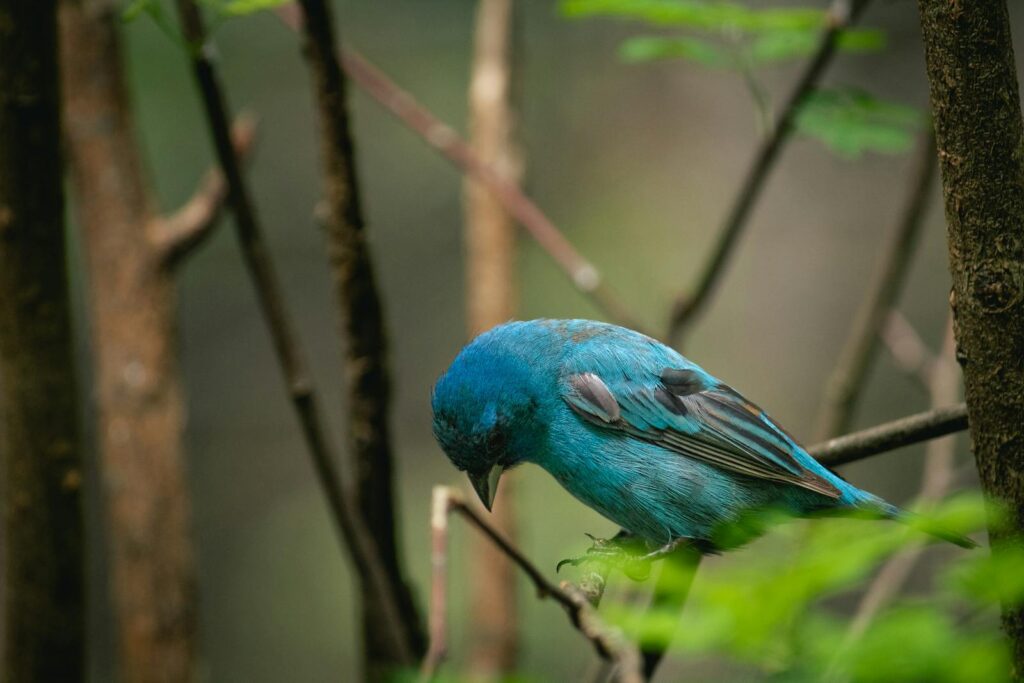
The Lazuli Bunting (Passerina amoena) presents one of the most beautiful color combinations among North American songbirds, with breeding males showcasing a brilliant turquoise-blue head and upper parts, a warm cinnamon-colored breast band, and clean white belly. This western counterpart to the Indigo Bunting inhabits brushy hillsides, riparian thickets, and woodland edges across the western United States, where males sing persistently from exposed perches during breeding season. Lazuli Buntings are long-distance migrants, traveling to western Mexico for winter before making the arduous journey back to their breeding grounds each spring. Interestingly, male Lazuli Buntings learn their songs not from their fathers but from neighboring males in their first breeding season, creating local “song neighborhoods” where nearby males share similar melodic themes. In parts of the Great Plains where their range overlaps with Indigo Buntings, hybrids occasionally occur, displaying intermediate plumage characteristics between these two beautiful species.
Conservation Challenges for Colorful Finches
Despite their visual appeal and adaptability, many of North America’s most colorful finches face significant conservation challenges in the modern world. Habitat loss represents perhaps the greatest threat, with development, agricultural expansion, and changing forest management practices reducing suitable breeding and wintering grounds for species ranging from Evening Grosbeaks to Lawrence’s Goldfinches. Climate change poses another serious concern, as shifting temperature and precipitation patterns alter food availability and potentially disrupt the specialized timing between crossbill breeding and conifer cone production. Disease has emerged as a particularly devastating factor for House Finches, which have battled a severe conjunctivitis epidemic since the 1990s that has killed millions of birds and continues to spread throughout populations. Window collisions, predation by outdoor cats, and competition from invasive species further compound these challenges, highlighting the need for comprehensive conservation strategies that address multiple threats simultaneously to ensure these living jewels continue to brighten North American landscapes for generations to come.
Attracting Colorful Finches to Your Backyard

Creating a finch-friendly backyard habitat can bring these colorful birds directly to your doorstep for up-close observation and enjoyment throughout the year. The most effective attraction method involves installing specialized tube feeders filled with nyjer (thistle) seed, which particularly appeals to American Goldfinches, Pine Siskins, and redpolls, while platform feeders offering black oil sunflower seeds will attract larger finches like grosbeaks and House Finches. Providing a reliable water source through bird baths or shallow water features gives finches a place to drink and bathe, which is especially important for maintaining their vibrant feathers. Native plantings that produce natural seed sources—including coneflowers, sunflowers, asters, and native grasses—create sustainable food sources while beautifying your landscape with flowers that eventually transform into seed heads that finches can harvest directly. Maintaining a pesticide-free yard ensures that seeds and water sources remain safe for these colorful visitors, while providing evergreen trees or dense shrubs offers essential shelter from predators and harsh weather, potentially encouraging some species to nest nearby during breeding season.
Seasonal Color Changes in North American Finches
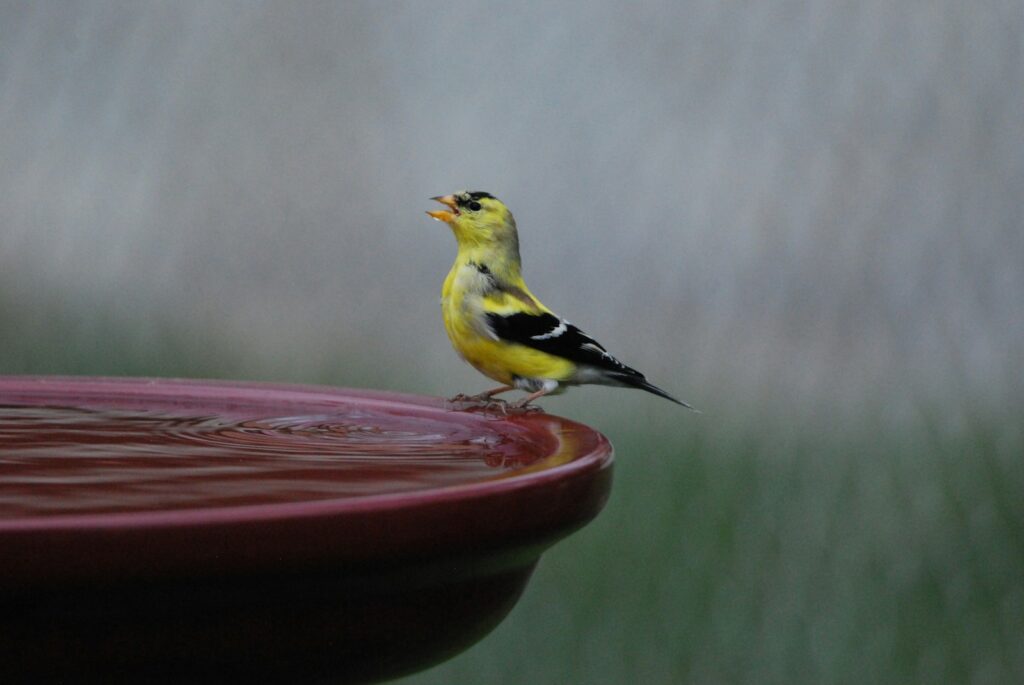
Many of North America’s most colorful finches undergo remarkable seasonal transformations in their appearance throughout the year, with males typically displaying their most vibrant plumage during breeding season. The American Goldfinch represents the most dramatic example, with males molting from dull olive-brown winter plumage to brilliant lemon-yellow breeding attire, a transformation so complete that casual observers might mistake winter and summer birds for different species entirely. These seasonal changes are primarily driven by hormonal shifts triggered by increasing day length in spring, which stimulate the growth of new, colorful feathers to replace worn winter plumage. Interestingly, unlike many birds that acquire breeding plumage through spring molts, American Goldfinches delay their colorful transformation until late spring or early summer, aligning with their unusually late breeding season that coincides with maximum thistle seed availability. The intensity of red pigmentation in House Finches, Purple Finches, and Cassin’s Fin