

In the silent embrace of darkness, a world unfolds where most creatures retreat into shelter, yet one group of predators reigns supreme. Owls, with their extraordinary adaptations, navigate the night with a mastery that has fascinated humans for millennia. These nocturnal hunters embody evolutionary perfection, turning what many would consider a handicap—hunting in darkness—into their greatest advantage. Their silent flight, exceptional vision, and acute hearing create a perfect storm of predatory prowess that makes them virtually undetectable to prey until it’s too late. This article explores the remarkable adaptations that allow owls to dominate the night, revealing the secrets behind their status as nature’s most efficient nocturnal hunters.
The Evolutionary Advantage of Nocturnal Hunting
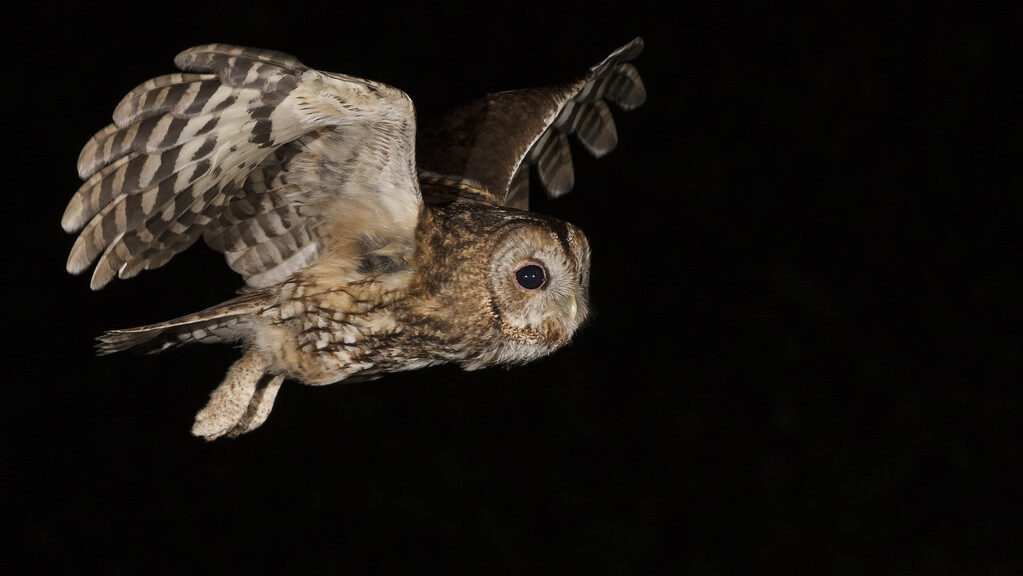
Owls’ mastery of darkness represents a brilliant evolutionary strategy that developed over millions of years. By hunting at night, these predators effectively avoid competition with daytime raptors like hawks and eagles that target similar prey. This temporal niche separation allows owls to access food resources that would otherwise be contested, giving them exclusive hunting rights during nighttime hours. Furthermore, many of their prey species—rodents, small mammals, and certain insects—are themselves nocturnal, creating a perfect alignment of predator and prey activity cycles. The evolutionary pressure to succeed in this nighttime niche has driven the development of specialized adaptations that make owls the undisputed monarchs of darkness, capable of detecting, pursuing, and capturing prey with astonishing efficiency in conditions where most predators would be effectively blind.
Extraordinary Visual Adaptations
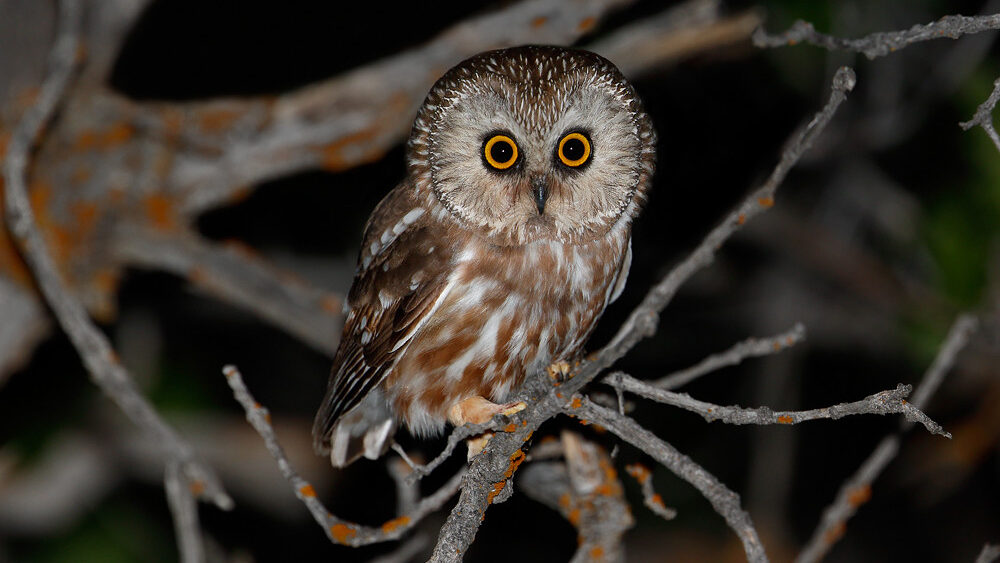
An owl’s eyes represent one of nature’s most remarkable visual adaptations, specifically engineered for low-light performance. Unlike human eyes, owl eyes are enormous relative to their skull size—so large they cannot move in their sockets, requiring the bird to turn its entire head to change view direction. These oversized eyes contain an exceptionally high density of rod cells—photoreceptors specialized for light sensitivity rather than color perception—allowing owls to see in light levels up to 100 times dimmer than what humans require. Additionally, many owl species possess a specialized layer behind the retina called the tapetum lucidum, which reflects light back through the retina for a second chance at detection, effectively doubling their light sensitivity. Perhaps most impressively, their eyes contain about five times more rod cells per square millimeter than human eyes, creating night vision so powerful that even on moonless nights, owls can detect the subtle movements of tiny prey animals across considerable distances.
The 270-Degree Head Rotation Mystery
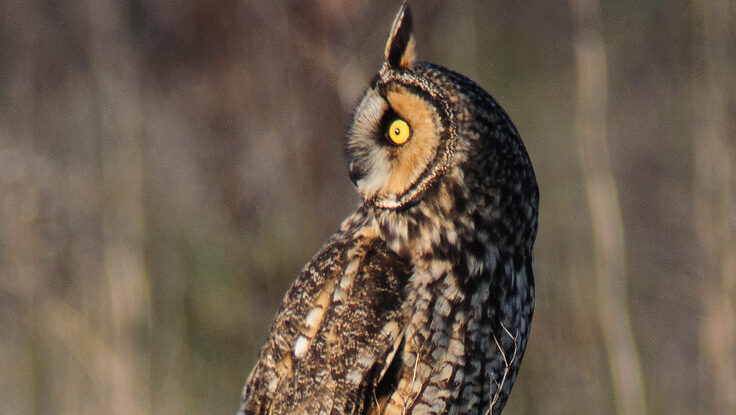
The owl’s ability to rotate its head up to 270 degrees—nearly three-quarters of a full circle—compensates brilliantly for their fixed eye position and represents one of their most iconic adaptations. This extraordinary range of motion stems from specialized adaptations in their cervical vertebrae, which contain fourteen neck bones compared to the seven found in humans. These additional vertebrae create a more flexible neck structure, but the true marvel lies in their circulatory system adaptations. Owls possess enlarged blood vessels at the base of the head that expand to collect blood, ensuring the brain remains supplied even during extreme rotation. Special air spaces in the vertebrae also accommodate the vertebral arteries, preventing them from being pinched off during dramatic turns. This remarkable adaptation allows owls to maintain their gaze on moving prey without repositioning their entire body, preserving their stealth while providing comprehensive visual coverage of their surroundings—a critical advantage when hunting in the unpredictable darkness.
The Acoustic Advantage: Asymmetrical Ears
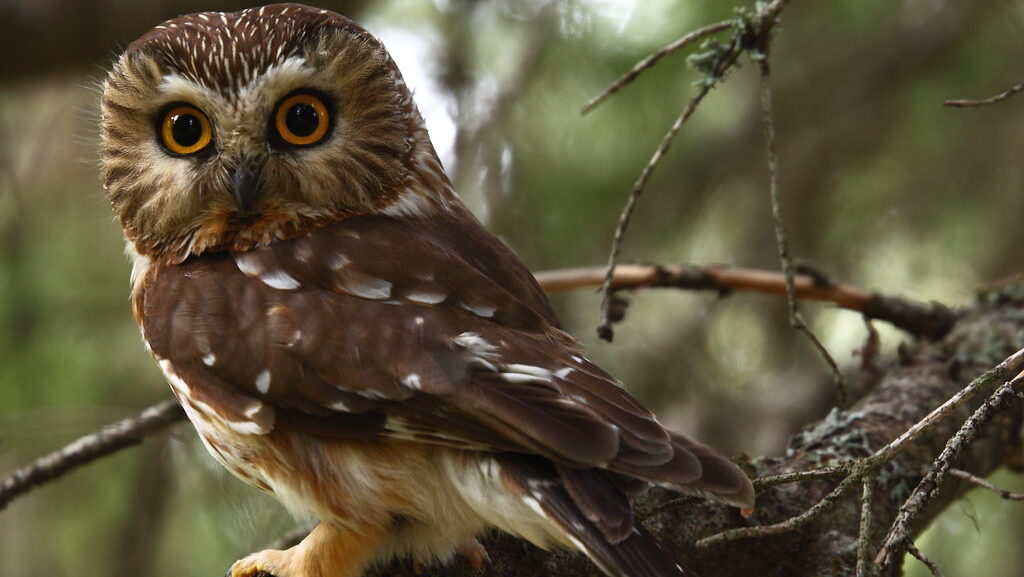
Perhaps the most fascinating yet invisible adaptation of owls is their asymmetrical ear positioning, which grants them three-dimensional hearing capabilities unmatched in the animal kingdom. In many owl species, particularly those specializing in hunting small mammals, one ear opening is positioned higher on the skull than the other, creating a slight time difference in sound reception between ears. This microsecond delay provides crucial directional information, allowing owls to triangulate prey location with astounding precision—down to less than one degree of accuracy in complete darkness. The facial disc of feathers that gives owls their distinctive appearance actually functions as a parabolic sound collector, channeling sound waves toward their ear openings. This acoustic system is so sensitive that barn owls can detect and precisely locate a mouse’s footsteps from over 75 feet away in absolute darkness, or capture prey moving beneath several inches of snow based solely on the faint sounds of movement. This acoustic superpower often proves more valuable than vision during their nocturnal hunts.
Silent Flight: The Stealth Technology
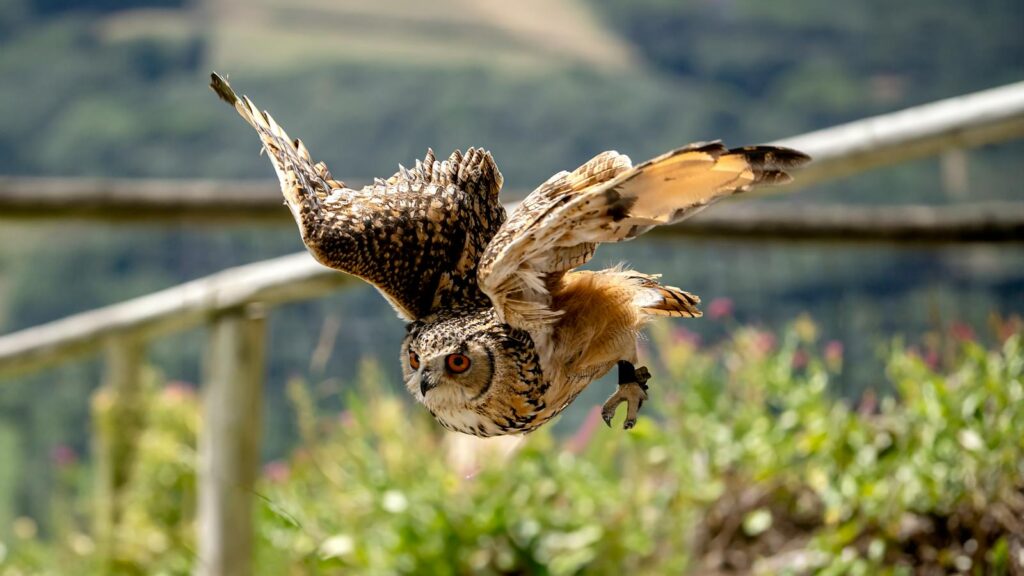
The owl’s ability to fly in complete silence represents one of evolution’s most sophisticated stealth technologies, achieved through several specialized feather adaptations. Unlike other birds whose wing movements create distinctive whooshing sounds, owl feathers feature unique modifications that virtually eliminate flight noise. The leading edges of their primary feathers display comb-like serrations that break up airflow turbulence, while the trailing edges have soft, flexible fringes that dampen sound waves as air passes through. Additionally, the surface of owl feathers contains a velvety microstructure that further absorbs sound frequencies. These adaptations collectively ensure that owls can approach prey without alerting them through flight noise, maintaining the critical element of surprise. Experiments measuring owl flight sounds in acoustic laboratories have shown they produce sound below the threshold of human hearing and, more importantly, below the hearing threshold of their prey species—a lethal advantage when hunting in darkness where auditory detection would otherwise provide early warning to potential victims.
Hunting Strategies in Zero Visibility
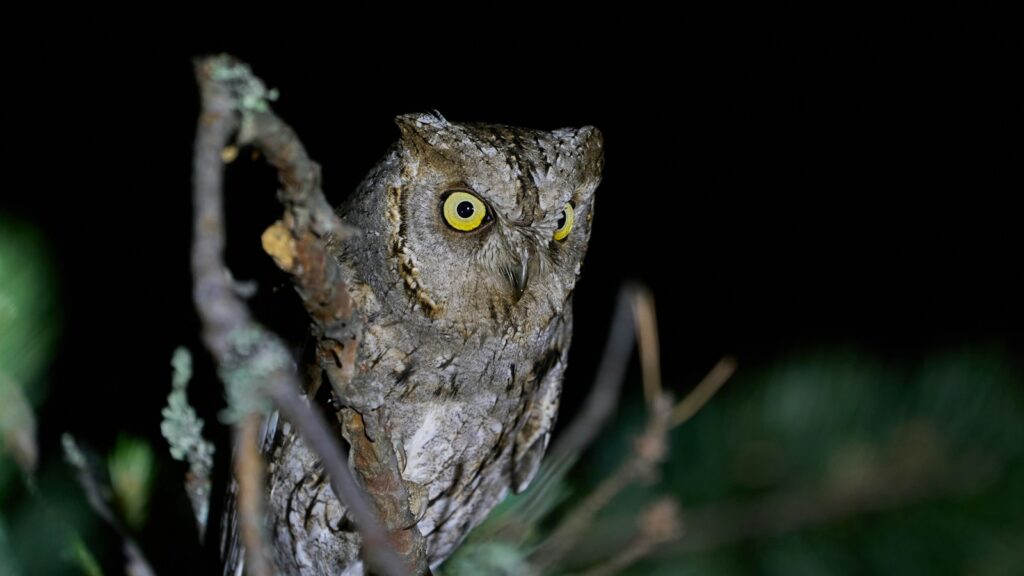
Owls employ sophisticated hunting strategies specifically optimized for low-light conditions, demonstrating remarkable behavioral adaptations beyond their physical attributes. Many species utilize a “perch-and-pounce” technique, wherein they position themselves on elevated vantage points to survey the landscape below, remaining motionless for extended periods while scanning for prey movement or sounds. Once a target is identified, owls execute precisely calculated attack trajectories, factoring in obstacles and optimizing approach angles for maximum capture success. Some woodland owl species have developed specialized hunting techniques for navigating through dense forest canopy in darkness, using memory mapping of their territory to avoid collisions while pursuing prey. Particularly fascinating is the ability of certain owl species to adjust their hunting methods based on ambient light conditions—using vision-dominant strategies on moonlit nights but switching to primarily acoustic hunting during overcast conditions or in dense vegetation. This tactical flexibility allows owls to maintain their predatory edge across a wide spectrum of nocturnal conditions, from twilight to absolute darkness.
The Deadly Precision of Talons
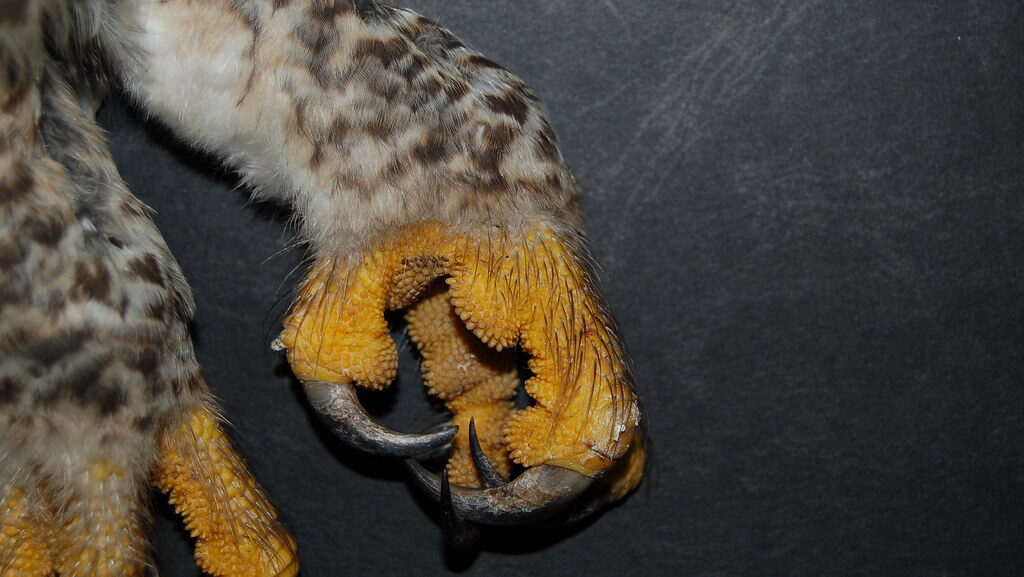
An owl’s talons represent specialized killing tools that have evolved specifically for securing prey in darkness with minimal margin for error. These powerful claws feature remarkably high grip strength relative to the bird’s body weight, with specialized tendons that lock automatically when perching or grasping prey, requiring no muscular effort to maintain a lethal grip. Most owl species possess a unique talon arrangement with two toes pointing forward and two backward (zygodactyl arrangement), which can quickly switch to an “X” pattern when striking, essentially creating a cage of sharp claws around the prey. The Great Horned Owl’s talons can exert a crushing force of approximately 300 pounds per square inch—stronger than a human hand and sufficient to instantly kill most small mammals. Additionally, the underside of owl toes contains specialized rough pads that enhance grip on struggling prey, while their talon curvature perfectly balances the need for deep penetration with the ability to release prey when necessary—an engineering marvel designed for lethality in darkness.
The Specialized Diet of Night Hunters

Owls’ dietary preferences reflect both their nocturnal lifestyle and their specialized hunting adaptations, creating ecological relationships that have profound impacts on ecosystem balance. While most people associate owls primarily with hunting mice and rats, their collective diet encompasses an extraordinarily diverse range of prey species active during nighttime hours. Smaller owl species like the Elf Owl focus primarily on large insects, including moths, beetles, and scorpions, while medium-sized species such as the Barn Owl specialize in rodent control, with a single family potentially consuming over 3,000 rodents annually. Larger owls demonstrate remarkable dietary versatility, with species like the Great Horned Owl capable of taking prey as large as skunks, rabbits, and even other raptors. Most fascinating is the efficient digestion system owls have developed, which allows them to process prey completely—bones, fur, and all—before regurgitating compact pellets containing indigestible materials, a adaptation that maximizes nutritional extraction from each successful hunt in the challenging nocturnal environment.
Diversity in Darkness: Different Owl Species’ Adaptations
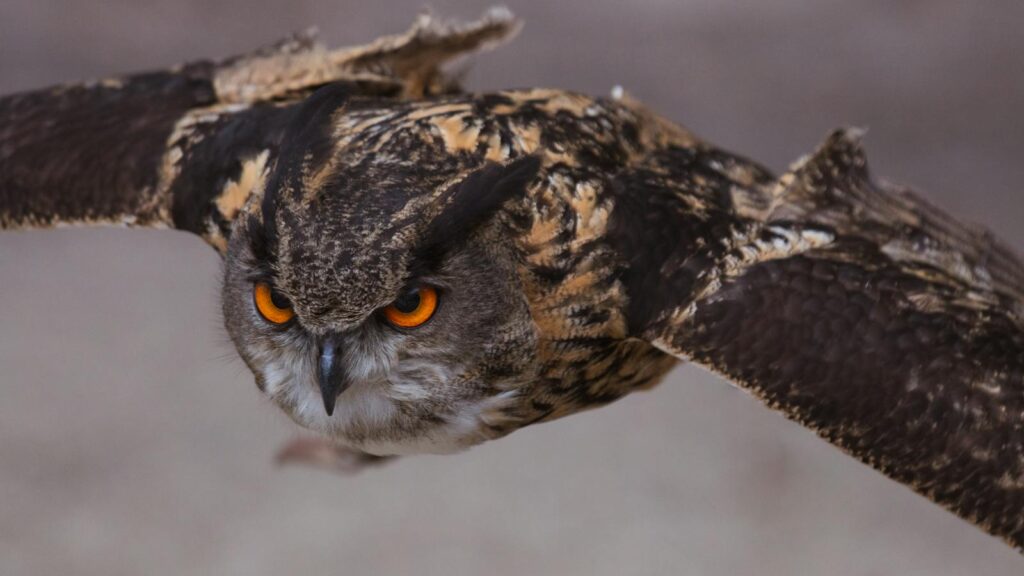
The remarkable diversity among owl species reveals how different lineages have fine-tuned their nocturnal adaptations to specific ecological niches and hunting environments. The diminutive Northern Saw-whet Owl, weighing less than five ounces, features extraordinarily sensitive hearing specialized for detecting the high-frequency sounds of small rodents in dense forest undergrowth. In contrast, the enormous Eurasian Eagle-Owl, with a wingspan exceeding six feet, possesses enhanced visual adaptations for spotting larger prey across open landscapes even in minimal light. The Barn Owl represents perhaps the most specialized acoustic hunter, with a heart-shaped facial disc that functions like a satellite dish to collect and focus sounds with unmatched precision. Desert-dwelling species like the Burrowing Owl have developed enhanced visual sensitivity to the blue-violet spectrum, allowing them to hunt during twilight periods when heat-sensitive prey emerge. Each owl species represents an evolutionary experiment in nocturnal specialization, with subtle variations in ear asymmetry, eye size, wing shape, and hunting behavior that optimize performance for specific prey types and habitats—all united by their shared mastery of darkness.
The Challenge of Daytime for Nocturnal Specialists
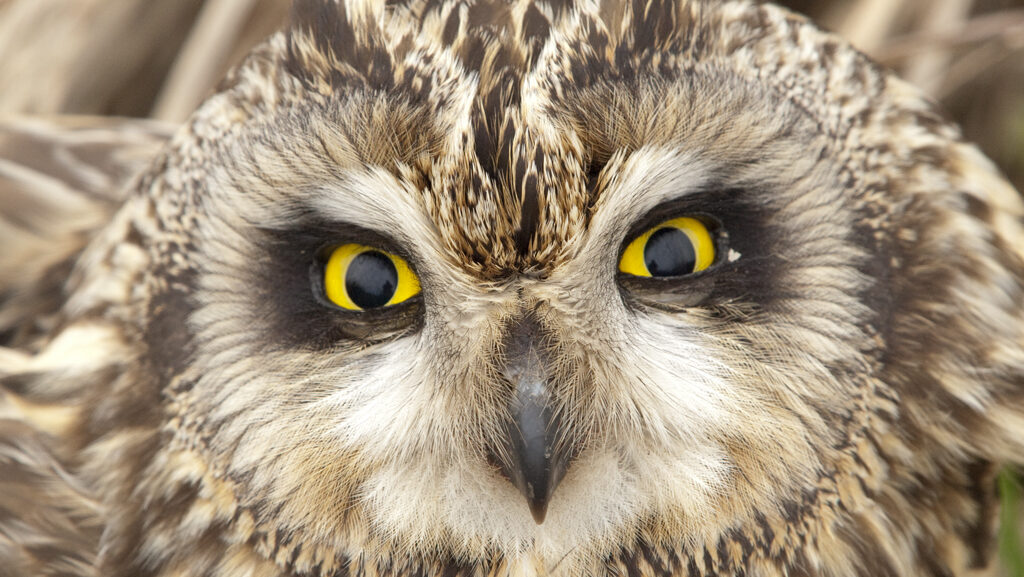
Despite their extraordinary nocturnal capabilities, daylight presents significant challenges for owls, revealing the evolutionary trade-offs inherent in their specialized adaptations. Their exceptionally light-sensitive eyes, while perfect for night hunting, can be painfully overstimulated in bright conditions, forcing many species to seek dense cover during daylight hours. This vulnerability during daytime explains why owls typically roost in protected locations with good camouflage, such as dense foliage, tree cavities, or abandoned buildings. Interestingly, this daytime vulnerability has driven the evolution of cryptic plumage that blends remarkably well with tree bark, foliage, and natural backgrounds, providing passive protection when owls are at their most defenseless. Some species have developed specialized adaptations to mitigate daytime vulnerability, such as the unique vertical slit pupils of certain owl species that can contract dramatically to protect retinal tissue from excessive light. Perhaps most fascinating is how some owl species have behaviorally adapted to this limitation by becoming crepuscular rather than strictly nocturnal, concentrating their hunting during dawn and dusk when light levels provide a perfect balance between their visual advantages and the reduced activity of potential predators.
Owls and Humans: Cultural Significance Throughout History
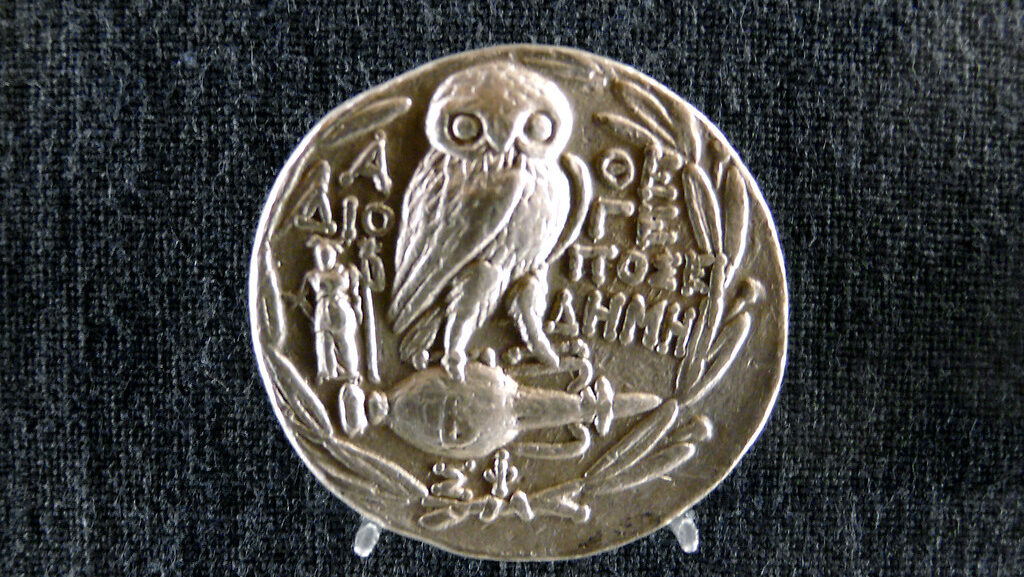
Owls’ mastery of darkness has captivated human imagination across cultures and throughout history, generating a fascinating tapestry of symbolic associations ranging from wisdom to death. In Ancient Greece, the owl—particularly the Little Owl—was sacred to Athena, goddess of wisdom, establishing the lasting Western association between owls and intelligence. Conversely, many Native American tribes viewed owls as harbingers of death or psychopomps guiding souls to the afterlife, their silent flight and nocturnal habits evoking connections to the spirit world. Medieval European cultures often feared owls as companions to witches or omens of impending disaster, their haunting calls piercing the darkness when most humans sought shelter. In Japanese folklore, owls (fukurō) represent good fortune and protection from suffering, while certain African cultures associate their nocturnal mastery with powerful shamanic abilities. This rich cultural symbolism reflects humanity’s enduring fascination with creatures that navigate a realm we find threatening and mysterious—the darkness—with such apparent ease and confidence, turning our primal fear of night into reverence, superstition, and ultimately scientific curiosity about their remarkable adaptations.
Conservation Challenges in a Brightening World

The increasing proliferation of artificial light across landscapes presents a growing threat to owls’ nocturnal dominance, disrupting the darkness they’ve evolved to master. Light pollution from urban development, roadways, and industrial facilities effectively shrinks the temporal niche that owls have occupied for millions of years, creating what ecologists call “loss of night.” This artificial illumination disrupts prey behavior patterns, with many rodent species becoming less active or changing movement patterns in illuminated areas, directly reducing hunting opportunities for owls. Additionally, artificial light can interfere with owls’ circadian rhythms, affecting breeding cycles, territory defense, and overall fitness. Conservation efforts increasingly focus on creating “dark sky preserves” where light pollution is minimized through specialized fixtures, timing systems, and buffer zones around critical owl habitat. Research indicates that even modest reductions in artificial lighting can significantly improve hunting success for urban owl populations, demonstrating that conscious human choices regarding outdoor lighting can help preserve the evolutionary advantage these remarkable nocturnal specialists have developed over millions of years.
The Future of Night Hunters in a Changing World

As human activity continues to transform landscapes globally, the future of owls as masters of darkness faces both challenges and opportunities that will test their remarkable adaptability. Climate change represents a significant concern, as shifting temperatures affect the timing of prey activity cycles and potentially create misalignment with owls’ breeding and hunting patterns that have evolved over millennia. Habitat fragmentation presents another serious threat, particularly for forest-dependent owl species requiring large territories with specific structural features for successful hunting in darkness. Yet, some owl species demonstrate surprising resilience in human-modified environments—Barn Owls often thrive in agricultural landscapes with abundant rodent populations, while certain urban-adapted species utilize buildings and parks as novel hunting grounds. Conservation strategies increasingly focus on maintaining dark corridors that connect habitat fragments, allowing owls to move through illuminated landscapes while preserving their nocturnal hunting advantage. The continued survival of these specialized night hunters will likely depend on a combination of their inherent adaptability and human willingness to accommodate their unique needs in our increasingly bright and fragmented world.
Conclusion
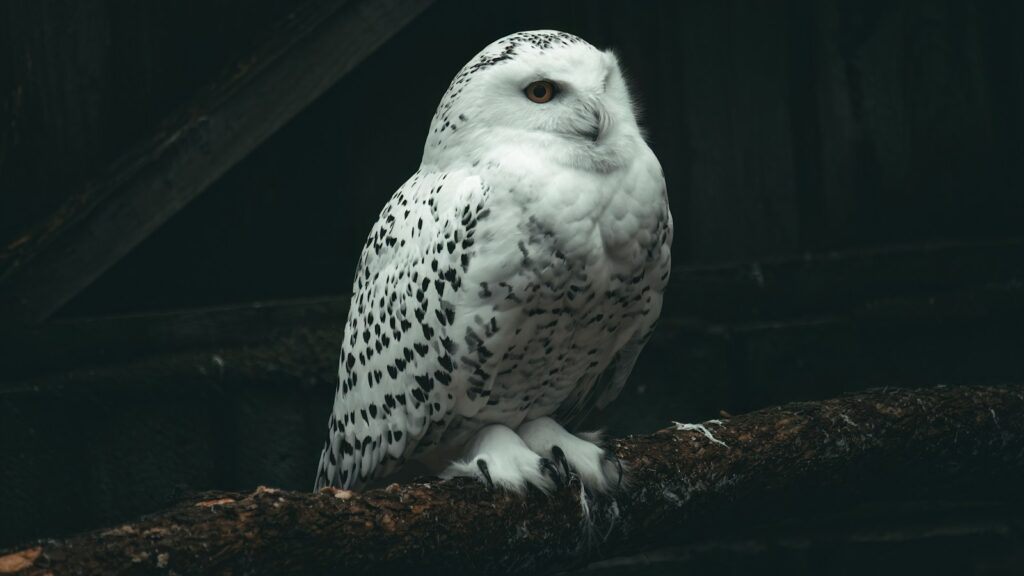
The remarkable adaptations that allow owls to dominate the darkness represent one of nature’s most impressive evolutionary achievements. From their specialized visual systems and asymmetrical ears to their silent flight feathers and deadly talons, every aspect of owl biology has been refined through natural selection to create the perfect nocturnal predator. These adaptations not only ensure their survival but establish them as critical components of healthy ecosystems, controlling rodent populations and maintaining biodiversity through their position as apex predators of the night. As we continue to understand the sophisticated mechanisms behind their nocturnal mastery, owls remind us of nature’s endless capacity for specialization and the extraordinary potential that exists in ecological niches that might initially seem limiting. In preserving darkness and protecting owl habitat, we safeguard not just these magnificent birds, but the mysterious nocturnal world they’ve evolved to rule with such unparalleled efficiency.