

When birds take to the skies in their seasonal journeys across continents, they often arrange themselves in distinctive formations that have fascinated humans for centuries. These patterns—from the iconic V-formations of geese to the fluid murmurations of starlings—are far more than just visually striking displays. They represent sophisticated evolutionary adaptations that help birds conserve energy during their grueling migratory journeys. The relationship between flock shape and energy consumption is a remarkable example of how nature has developed solutions to complex physical problems. Through careful positioning, timing, and coordination, birds can significantly reduce their energy expenditure, allowing them to complete migrations that would otherwise be physically impossible for individual birds.
The Physics Behind Formation Flight

The aerodynamic advantages of formation flight are rooted in fundamental principles of physics. When a bird flies, it creates vortices—spiraling air currents that flow off the tips of its wings. These vortices create areas of upwash (rising air) and downwash (descending air) around the bird. A trailing bird that positions itself correctly can capture the upwash generated by birds ahead of it, essentially “riding” on this rising air current. Research has shown that birds positioned in the upwash zone can achieve a reduction in drag of up to 65% compared to solo flight. This positioning allows them to maintain the same speed and altitude while expending significantly less energy. The precise angle and distance between birds is critical, as incorrect positioning can place a bird in downwash, which would increase rather than decrease its energy expenditure.
The Iconic V-Formation
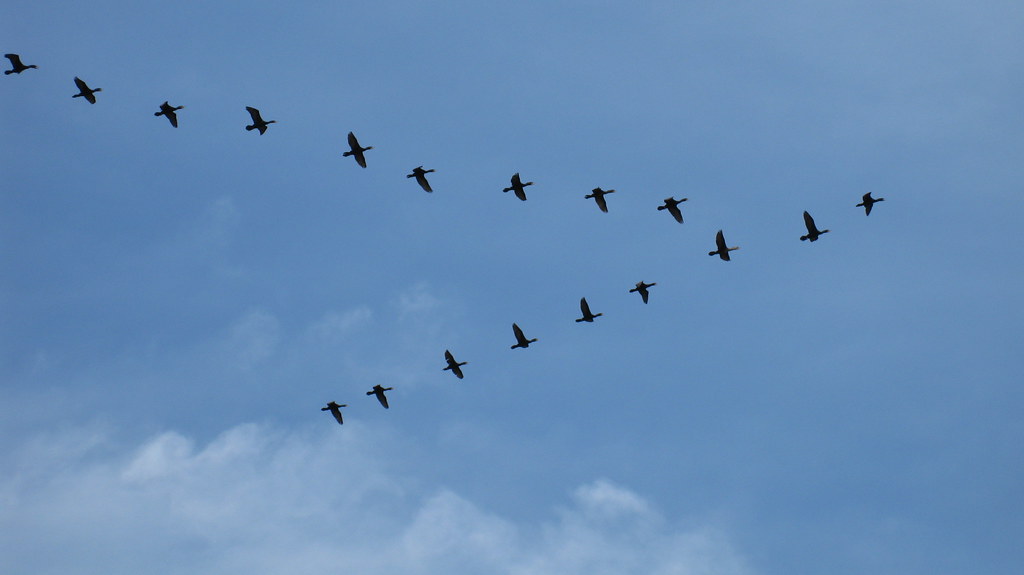
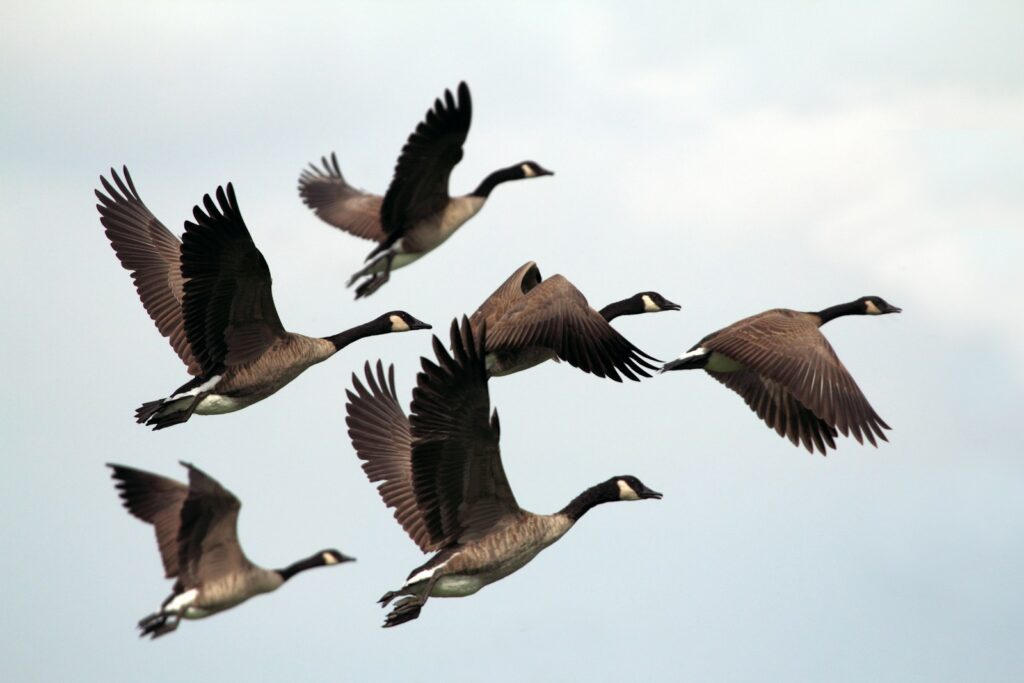
The V-formation, commonly observed in migrating geese, ducks, and other large waterfowl, has evolved as one of the most energy-efficient configurations for long-distance flight. In this arrangement, birds position themselves in a diagonal line extending back from a lead bird, creating a shape similar to the letter “V” or a checkmark. Each bird flies slightly above and behind the bird in front, precisely positioned to catch the upwash from the wingtip vortices of the preceding bird. Studies using high-precision GPS tracking have shown that birds in V-formations position themselves at an average of about 4 feet behind the bird ahead and at a precise angle that maximizes their ability to capture upwash. The energy savings are substantial—birds flying in the optimal position in a V-formation can reduce their heart rate by up to 20-30% compared to solitary flight, allowing them to fly significantly farther before needing to rest.
Rotating Leadership Roles

A fascinating aspect of V-formation flight is the rotation of birds through different positions, particularly the energetically demanding role of leading the formation. The bird at the front of the formation cannot benefit from the upwash of others and therefore expends more energy than those following behind. To address this inequality, birds have developed a cooperative system where they take turns occupying the lead position. When the lead bird becomes fatigued, it will fall back into the formation, allowing a fresher bird to take the front position. This rotation has been carefully documented in species like Canada geese, where the lead position may change every few minutes during extended flights. The rotation system ensures that no single bird bears the full energetic cost of leading, effectively distributing the workload across the entire flock and enabling the group to fly farther than would be possible with a constant leader.
Single-File Formations in Coastal Birds

While V-formations are perhaps the most recognized pattern, some species opt for different arrangements that still confer aerodynamic benefits. Coastal species like pelicans and ibises often fly in straight lines or slightly curved formations, particularly when traveling along coastlines. In these linear formations, each bird still benefits from the vortices created by the bird ahead, though the mechanism differs slightly from that of V-formations. The trailing birds in a line formation position themselves to catch upwash from the bird directly in front rather than at an angle. Recent research using computational fluid dynamics has demonstrated that even in these single-file formations, birds can achieve energy savings of 15-20% compared to solo flight. These straight-line formations may be particularly advantageous when birds are following geographic features like coastlines, where maintaining a V-formation might be less practical.
Murmurations: Fluid Formations of Starlings
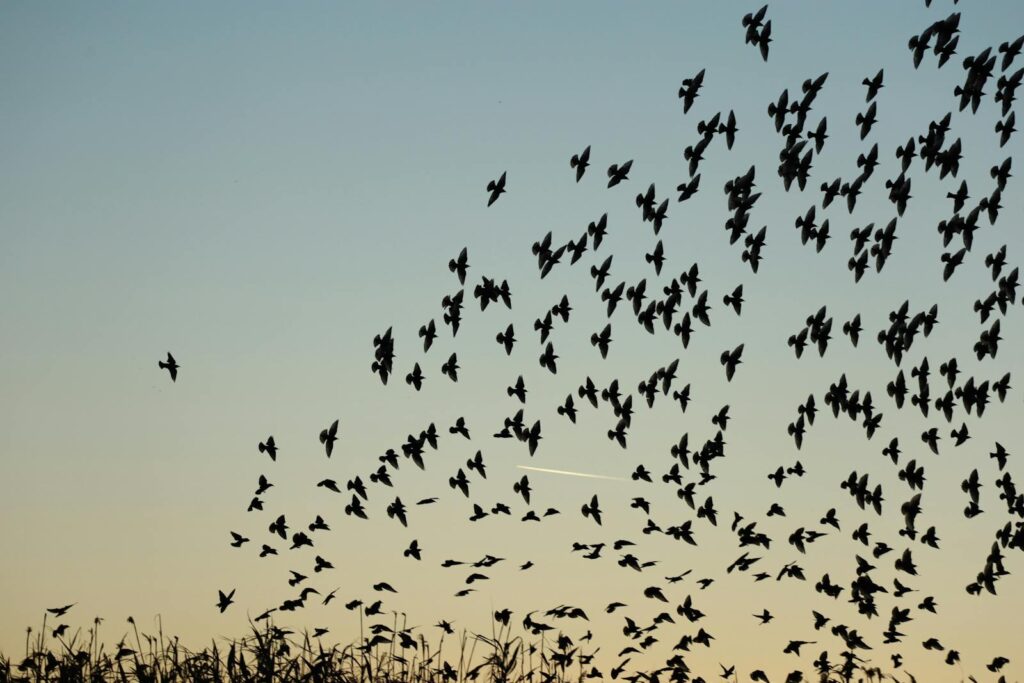
Starling murmurations represent a dramatically different approach to group flight, characterized by dense, constantly shifting cloud-like formations rather than rigid structured patterns. These spectacular aerial displays, sometimes involving thousands of birds, may appear chaotic but actually follow precise rules of collective behavior. While murmurations aren’t primarily associated with long-distance migration, they do offer energy benefits through a different mechanism than V-formations. Within a murmuration, each bird maintains specific distances from its neighbors while constantly adjusting its position based on the movements of those around it. This arrangement creates a protective effect against predators through confusion and dilution. From an energetic perspective, birds in the middle of the murmuration experience reduced wind resistance as their neighbors effectively shield them from air currents. Studies using three-dimensional modeling have shown that birds positioned optimally within murmurations can reduce their energy expenditure by up to 25%, though this benefit varies greatly depending on position within the flock.
Drafting in Pelican Formations
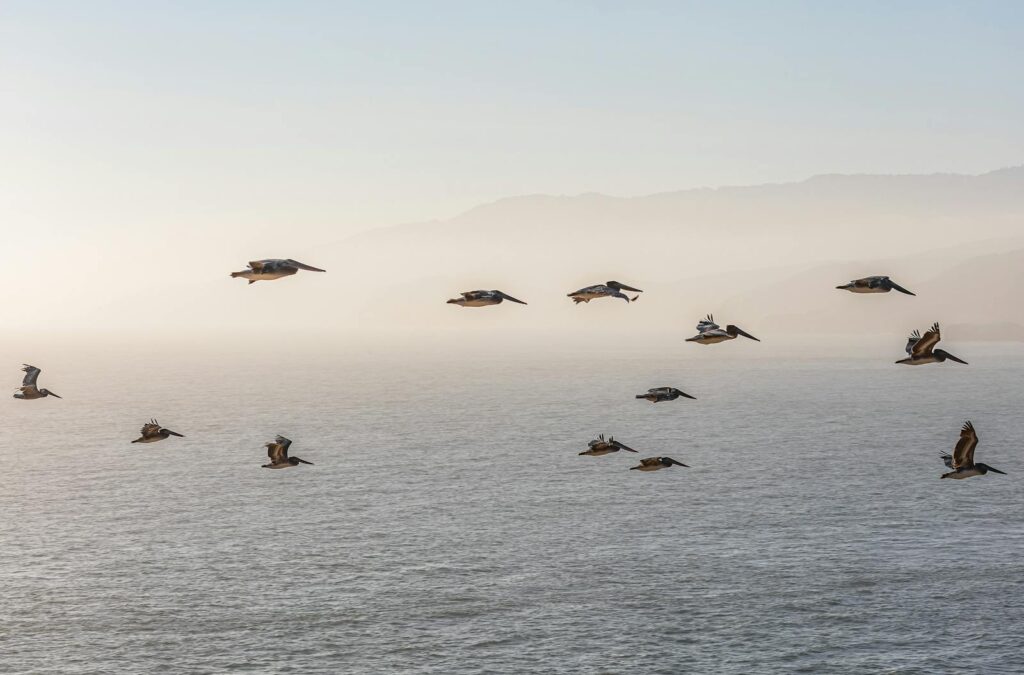
Pelicans demonstrate a specialized formation behavior that combines elements of both V-formations and linear arrangements to maximize energy efficiency during migration. These large birds often fly in formations that alternate between V-shapes and diagonal lines, maintaining precise positioning that allows them to benefit from the upwash created by birds ahead. What makes pelican formations particularly fascinating is their use of ground effect—the increased lift and reduced drag that occurs when flying close to a surface like water. When pelicans migrate along coastlines, they often fly at low altitudes over water, where they can combine the benefits of formation flight with ground effect aerodynamics. Tracking studies have shown that pelicans in optimal formation positions can reduce their energy expenditure by as much as 50-60% compared to solo flight at higher altitudes. This combination of strategies allows pelicans, despite their large size and weight, to complete migrations of thousands of miles between breeding and wintering grounds.
Echelon Formations in Waterfowl
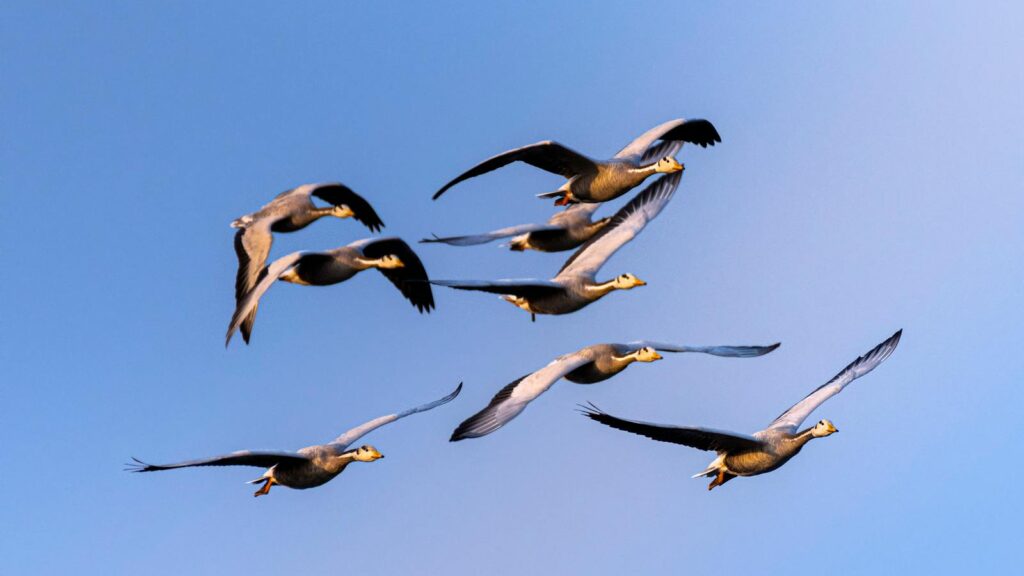
Some species of ducks and geese employ echelon formations—diagonal lines where each bird flies at the same height rather than in a true V-shape. This arrangement allows birds to avoid the downwash from birds directly ahead while still benefiting from upwash at wing tips. Echelon formations are particularly common during shorter flights or when flocks are smaller. Research using wind tunnel experiments has demonstrated that birds in echelon formations achieve energy savings of 15-25% compared to solo flight, though this is somewhat less efficient than a perfect V-formation. The advantage of echelon formations is their simplicity and flexibility, as they require less precise positioning than V-formations and can be maintained with fewer birds. Echelon formations also allow for quick transitions to other formations as conditions change or as birds join or leave the group during migration.
The Role of Bird Size and Wing Shape
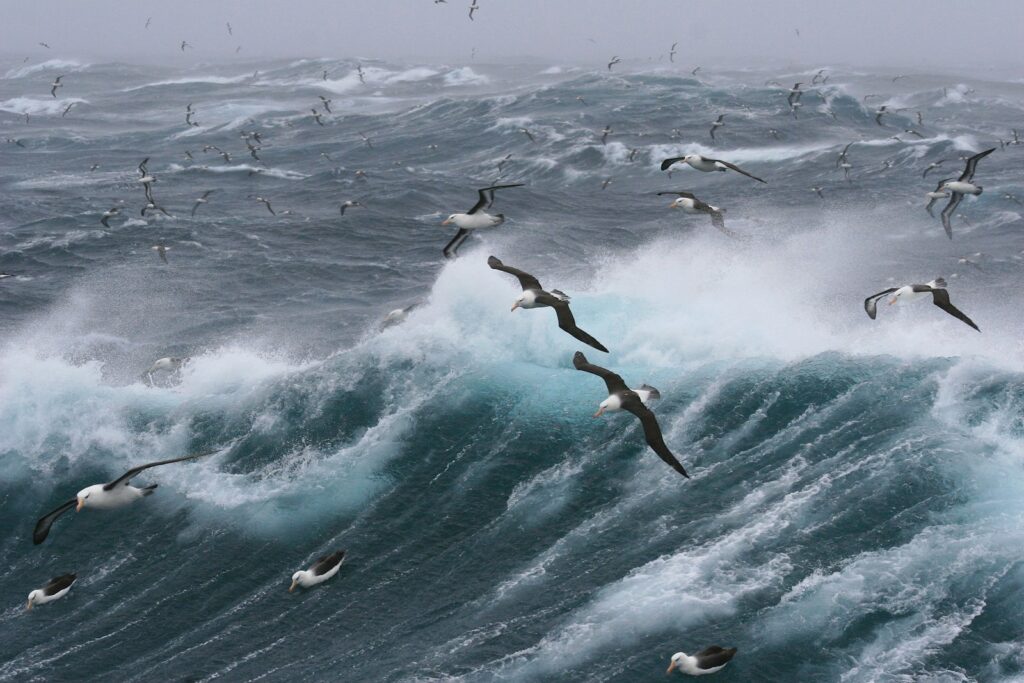
The effectiveness of different flock formations varies significantly based on the physical characteristics of the birds involved, particularly their size and wing shape. Larger birds with higher wing loading (the ratio of weight to wing area) typically benefit more from formation flight than smaller species. This explains why formation flight is most common among larger migratory species like geese, swans, and pelicans. Wing shape also plays a crucial role in determining the optimal formation. Birds with high-aspect-ratio wings (long and narrow, like those of albatrosses) create stronger and more persistent wingtip vortices that provide greater benefits to trailing birds. In contrast, birds with low-aspect-ratio wings (short and broad, like those of hawks) produce vortices that dissipate more quickly, reducing the potential energy benefits of formation flight. These physical constraints help explain why some species have evolved to use formation flight extensively while others rarely do so.
Energy Savings Across Different Species
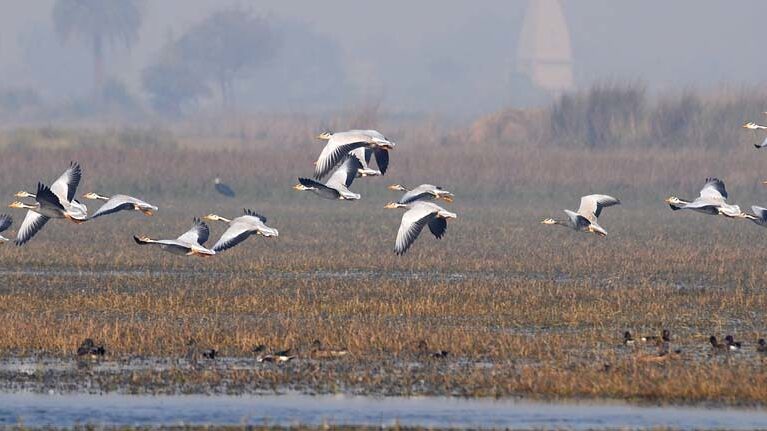
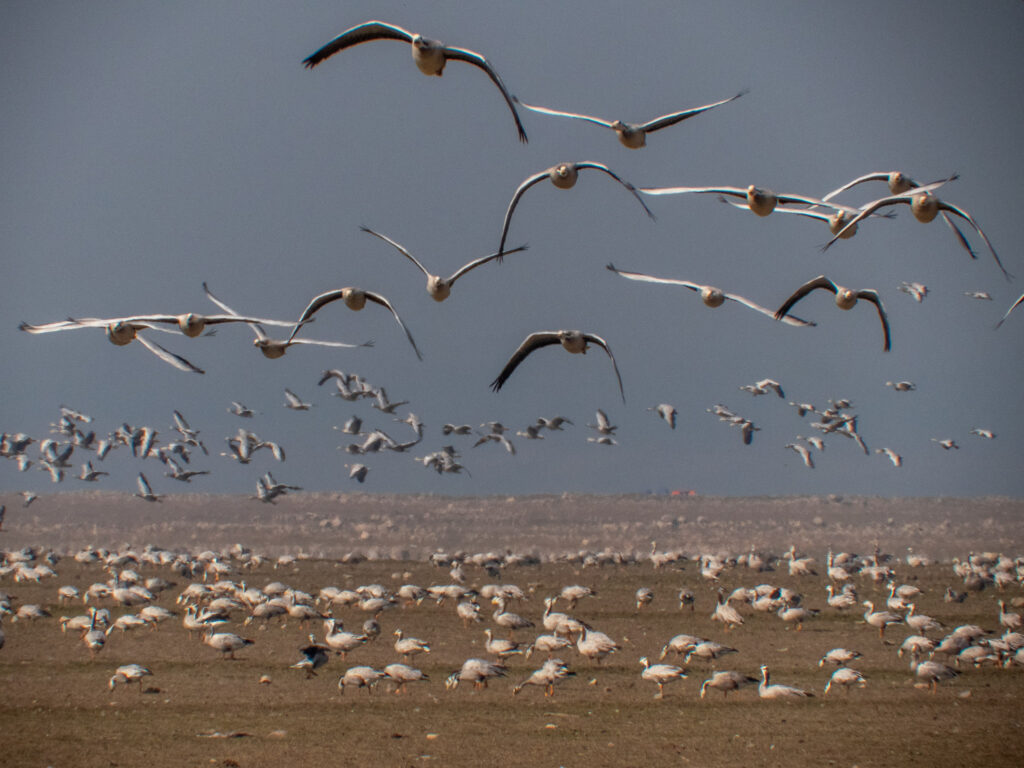
The degree of energy conservation achieved through formation flight varies considerably across bird species, reflecting differences in anatomy, flight mechanics, and migratory strategies. Ibises flying in formation have been documented to reduce their heart rates by 22-38% compared to solo flight, directly indicating lower energy expenditure. Northern bald ibises tracked with sophisticated sensor backpacks showed they optimized their wing flapping to capture upwash from birds ahead, thereby reducing their energy output by approximately 14%. Canada geese, among the most studied formation flyers, demonstrate energy savings of 10-14% when flying in their characteristic V-formations. For bar-headed geese, which undertake one of the most physically demanding migrations over the Himalayas, formation flight may reduce energy expenditure by up to 20%, a critical advantage when flying at altitudes with reduced oxygen. These varying percentages reflect not just differences in bird physiology but also differences in research methodology, as measuring energy expenditure in wild, migrating birds presents significant technical challenges.
Learning and Coordination in Flock Formations
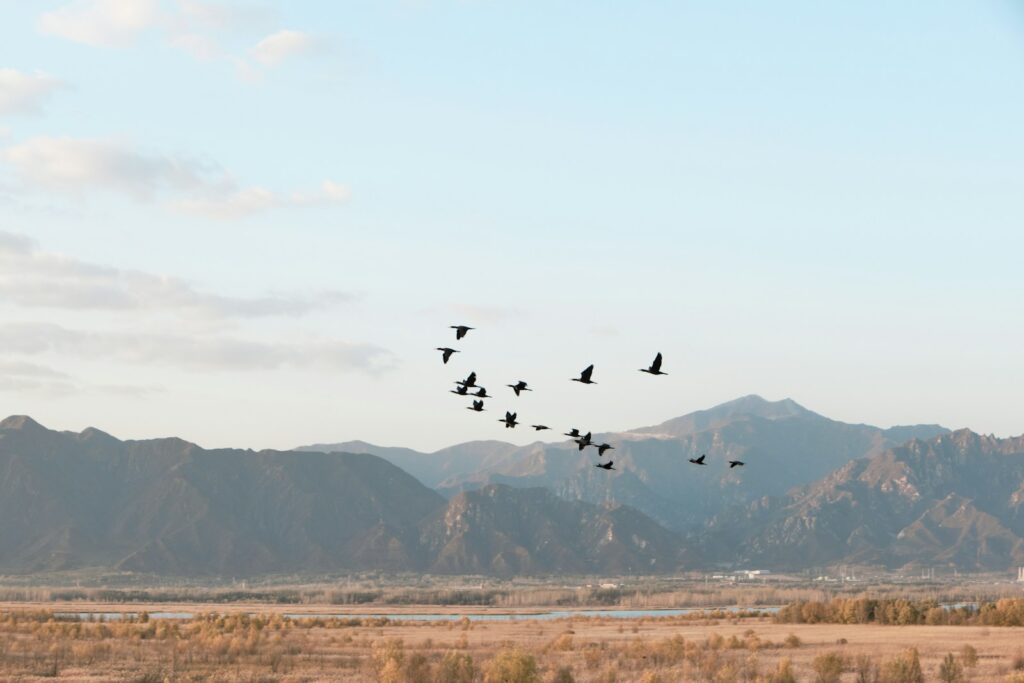
The precision positioning required for effective formation flight is not innate but must be learned and perfected through experience. Young birds on their first migration typically demonstrate less precise positioning and therefore gain fewer aerodynamic benefits than experienced adults. Research with northern bald ibises raised in captivity showed that juvenile birds gradually improved their formation positioning over successive flights during their first migration. The learning process involves not just understanding where to position oneself relative to other birds but also how to coordinate wing beats to maximize energy extraction from the vortices ahead. High-resolution tracking studies have revealed that birds in formations often synchronize their wing beats, with trailing birds flapping their wings at precisely timed intervals relative to the birds ahead. This synchronized flapping allows trailing birds to interact optimally with the changing patterns of upwash and downwash, maximizing energy extraction while maintaining stable flight.
Formation Flight in Changing Conditions

The optimal flock formation is not static but changes in response to environmental conditions, particularly wind speed and direction. When flying into headwinds, birds typically adopt tighter formations with more precise positioning to maximize energy conservation during these challenging conditions. Conversely, in tailwind conditions, formations often become looser as the energy savings from formation flight become less critical. Studies using computational fluid dynamics have shown that the angle of the V-formation often adjusts in response to crosswinds, with the formation becoming asymmetrical to compensate for lateral wind forces. Some species, like cranes, have been observed to shift between different formation types—from V-formations to echelons to lines—as wind conditions change during a single migratory journey. This adaptive flexibility allows birds to optimize their energy expenditure across varying conditions, representing a sophisticated response to the complex challenges of long-distance migration.
Technological Applications Inspired by Bird Formations
The remarkable efficiency of bird formations has inspired significant technological innovations, particularly in the fields of aviation and robotics. Military and commercial aviation researchers have explored formation flying as a method to reduce fuel consumption in aircraft, with potential fuel savings of 10-15% for planes flying in formations similar to those used by birds. The Airbus “fello’fly” project demonstrated that commercial aircraft could save 5-10% in fuel by flying in formations that take advantage of wake updrafts, directly mimicking the strategies used by migratory birds. In robotics, drone swarm technology increasingly incorporates algorithms based on bird flocking behavior, allowing for energy-efficient coordination of multiple autonomous vehicles. These biomimetic approaches represent a growing recognition that natural selection has produced solutions to complex problems of energy efficiency that can inform human technology. By understanding and adapting the principles that govern bird formations, engineers continue to develop systems that reduce energy consumption in transportation and other fields.
Future Research Directions
Despite significant advances in understanding the relationship between flock shape and energy consumption, important questions remain that will drive future research in this field. One major area of investigation focuses on the sensory and neurological mechanisms that allow birds to maintain precise positioning within formations, particularly in turbulent conditions. Researchers are developing increasingly sophisticated tracking technologies, including miniaturized sensors that can measure not just position but also physiological parameters like heart rate and wing movements in real time during migration. Another promising direction involves the integration of aerodynamic modeling with evolutionary biology to understand how formation flight behaviors evolved and why they developed in some species but not others. Climate change presents an additional imperative for research, as altering wind patterns and weather systems may affect the energy benefits of different formation types, potentially forcing migratory birds to adapt their formations and routes. Understanding these adaptations will be crucial for conservation efforts aimed at protecting migratory species in a changing climate.
The study of flock formations in migratory birds beautifully illustrates how evolution has shaped complex behaviors that address the fundamental challenge of energy conservation during long-distance travel. From the precise aerodynamics of V-formations to the fluid coordination of murmurations, these patterns represent sophisticated solutions to the problem of efficient flight. As birds face increasing challenges from habitat loss, climate change, and other human impacts, their ability to conserve energy during migration becomes ever more critical to their survival. At the same time, the principles underlying these formations continue to inspire technological innovations that may help humans address our own energy challenges. In the elegant shapes of bird flocks, we find not just objects of natural beauty, but models of efficiency that bridge the worlds of biology, physics, and engineering—a testament to the ingenuity of natural selection and its relevance to human innovation.